
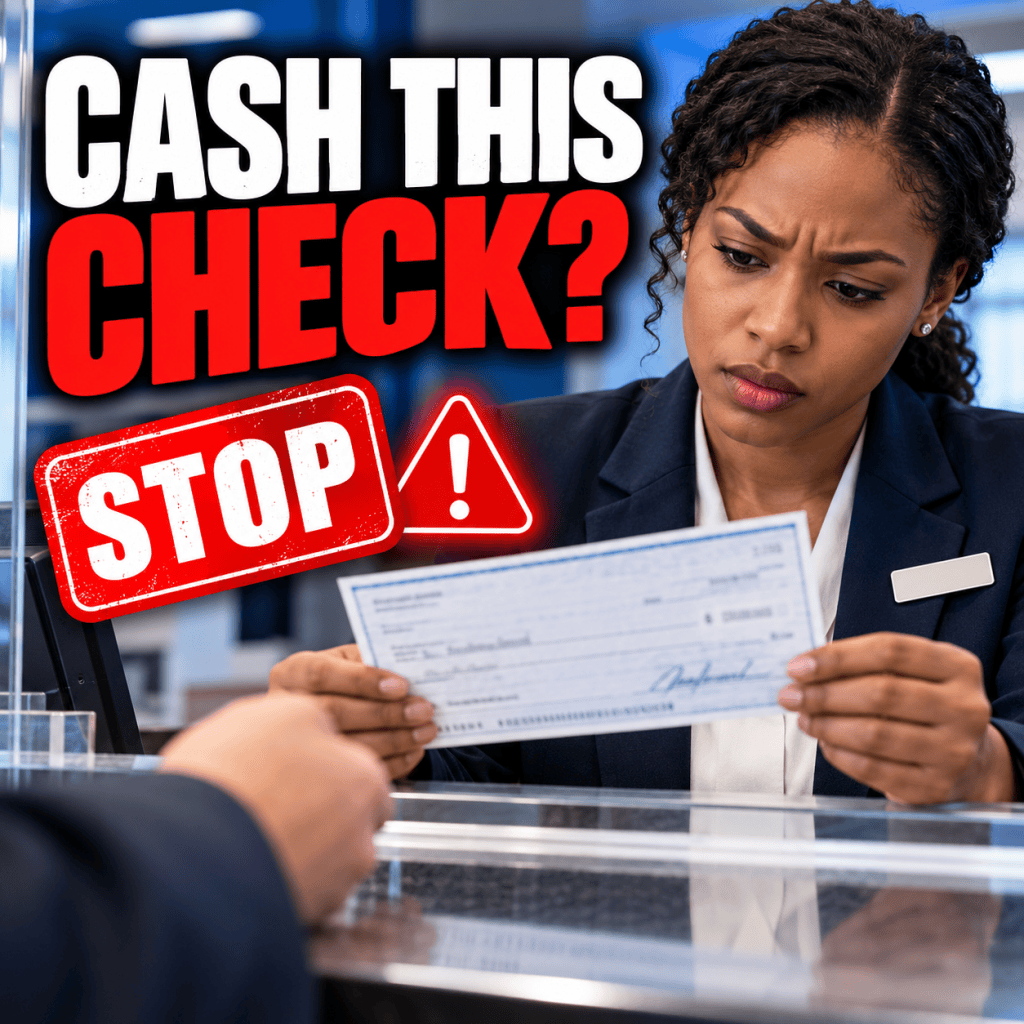
A check can look perfectly normal and still create a problem for the bank.
That is one of the biggest lessons new bank tellers have to learn.
The job is not simply to accept a check, look at the balance, and hand over cash. Tellers are often one of the last lines of defense before a suspicious transaction becomes a real loss.
That is why strong teller training should focus on more than speed and customer service.
It should teach one simple habit:
Stop. Verify. Escalate.
Why Check Transactions Deserve Extra Attention
Checks create risk because there are several things that can go wrong at the same time.
A check may be altered.
A signature may not match.
The endorsement may be missing or incorrect.
The person presenting the check may not be the person entitled to receive the funds.
A business check may be presented through a personal account.
The check may be stale-dated, suspicious, counterfeit, or connected to unusual activity.
And sometimes the check itself is only one part of a larger fraud attempt.
A teller does not need to become an investigator.
But a teller does need to recognize when something does not look right.
Step One: Stop
One of the most common teller mistakes is moving too quickly.
When a lobby is busy or the customer appears impatient, there can be pressure to process the transaction without slowing down.
That is exactly when mistakes happen.
Stopping does not mean accusing the customer of fraud.
It means taking enough time to review the transaction before completing it.
A teller should pause when something feels inconsistent, unusual, or outside normal account activity.
That pause can prevent a much larger problem later.
Step Two: Verify
Before cashing or accepting a suspicious check, several basic items should be reviewed.
Start with the check itself.
Does the payee information make sense?
Is the check properly endorsed?
Does anything appear altered?
Do the written and numerical amounts match?
Is the date reasonable?
Does the check appear damaged, washed, overwritten, or otherwise unusual?
Then look at the account relationship.
Does the person presenting the check match the account information?
Is the transaction consistent with normal activity?
Is this a type of check the institution normally allows to be cashed?
Are there account restrictions, alerts, holds, or other warnings?
The goal is not to prove fraud.
The goal is to determine whether the transaction is routine enough to continue or unusual enough to require another set of eyes.
Endorsements Matter More Than New Tellers Realize
Endorsements are one of the easiest areas for inexperienced tellers to overlook.
A customer may sign the back of a check and assume that is enough.
Sometimes it is.
Sometimes it is not.
The teller may need to consider whether the endorsement matches the payee, whether multiple payees are involved, whether the check is payable to a business, whether a restrictive endorsement is present, or whether the bank’s procedures require additional verification.
This is why tellers should never treat the back of the check as an afterthought.
The endorsement can be just as important as the front.
Business Checks Can Create Special Problems
Another area that deserves attention is business checks.
Suppose a check is payable to a company, but the customer wants to deposit it into a personal account.
That should immediately raise a procedural question.
Is that allowed under the institution’s policy?
Does the customer have authority to negotiate the item?
Does the endorsement support the transaction?
Does the account type match the payee?
The teller should not make assumptions simply because the customer says they own the business.
Ownership and authority still need to be handled according to the bank’s procedures.
Watch for Alterations
Altered checks are another reason teller training matters.
A check can be changed after it is issued.
The amount may be modified.
The payee may be changed.
Information may be erased, overwritten, or chemically altered.
Some changes are obvious.
Others are not.
Tellers should look for inconsistencies in handwriting, ink, spacing, fonts, alignment, and other unusual characteristics.
Again, the teller’s job is not to conduct forensic analysis.
The job is to recognize when something deserves additional review.
Customer Behavior Can Be Part of the Picture
A suspicious check does not always look suspicious on paper.
Sometimes the behavior surrounding the transaction creates the concern.
A customer may appear unusually rushed.
They may pressure the teller to avoid verification.
They may repeatedly change their explanation.
They may ask unusual questions about holds, reporting thresholds, or how quickly funds will become available.
None of those things automatically means fraud is occurring.
But behavior can be part of the overall risk picture.
Tellers should be trained to notice patterns without making assumptions or confronting customers.
Step Three: Escalate
This is the most important part.
When a teller is uncertain, the correct move is not to guess.
The correct move is to escalate.
That may mean involving a lead teller, supervisor, branch manager, operations employee, fraud department, or another person designated by the institution.
A good teller should never feel pressured to complete a questionable transaction simply because they do not want to bother a manager.
Escalation is not failure.
Escalation is part of the control process.
Banks create procedures for a reason.
The goal is to make sure one employee is not forced to make every difficult judgment alone.
The Teller Should Not Accuse the Customer
This deserves special attention.
If a transaction appears suspicious, the teller should not say:
“This check is fake.”
The teller may not know that.
A better approach is to follow internal procedures and explain only what is necessary.
For example, the transaction may require additional verification.
A supervisor may need to review it.
The bank may not be able to complete the transaction immediately.
The exact wording should follow the institution’s policy.
Tellers should stay professional, neutral, and procedural.
Why This Training Matters
Check fraud can create losses for customers and financial institutions.
But teller mistakes can also create customer-service problems.
Declining legitimate transactions unnecessarily can frustrate customers.
Approving suspicious transactions without review can expose the bank to risk.
That is why teller training should not be built around one extreme or the other.
The goal is not:
Decline everything unusual.
And it is not:
Keep the line moving no matter what.
The goal is:
Recognize risk, verify what you can, and escalate what you cannot confidently resolve.
A Simple Teller Checklist
Before completing a check transaction, ask:
Does the check appear legitimate?
Does the payee match the person or account receiving the funds?
Is the endorsement appropriate?
Does the amount appear consistent?
Is the check within an acceptable date range under the bank’s procedures?
Does anything appear altered?
Does the transaction make sense for the account?
Are there any alerts, restrictions, or unusual circumstances?
And finally:
Do I feel confident completing this transaction under the bank’s policy?
If the answer to that last question is no, stop and escalate.
Final Takeaway
A teller does not need to know everything.
But a teller does need to know when to stop.
That is one of the most valuable skills in banking.
A suspicious check may look ordinary.
A fraud attempt may sound convincing.
A customer may become impatient.
None of that changes the process.
Stop. Verify. Escalate.
That simple habit can protect the customer, the teller, and the bank.
This article is for general banking education and training purposes. Financial institutions may have different policies, procedures, risk controls, and escalation requirements. Employees should always follow their institution’s current procedures and applicable laws and regulations.

