
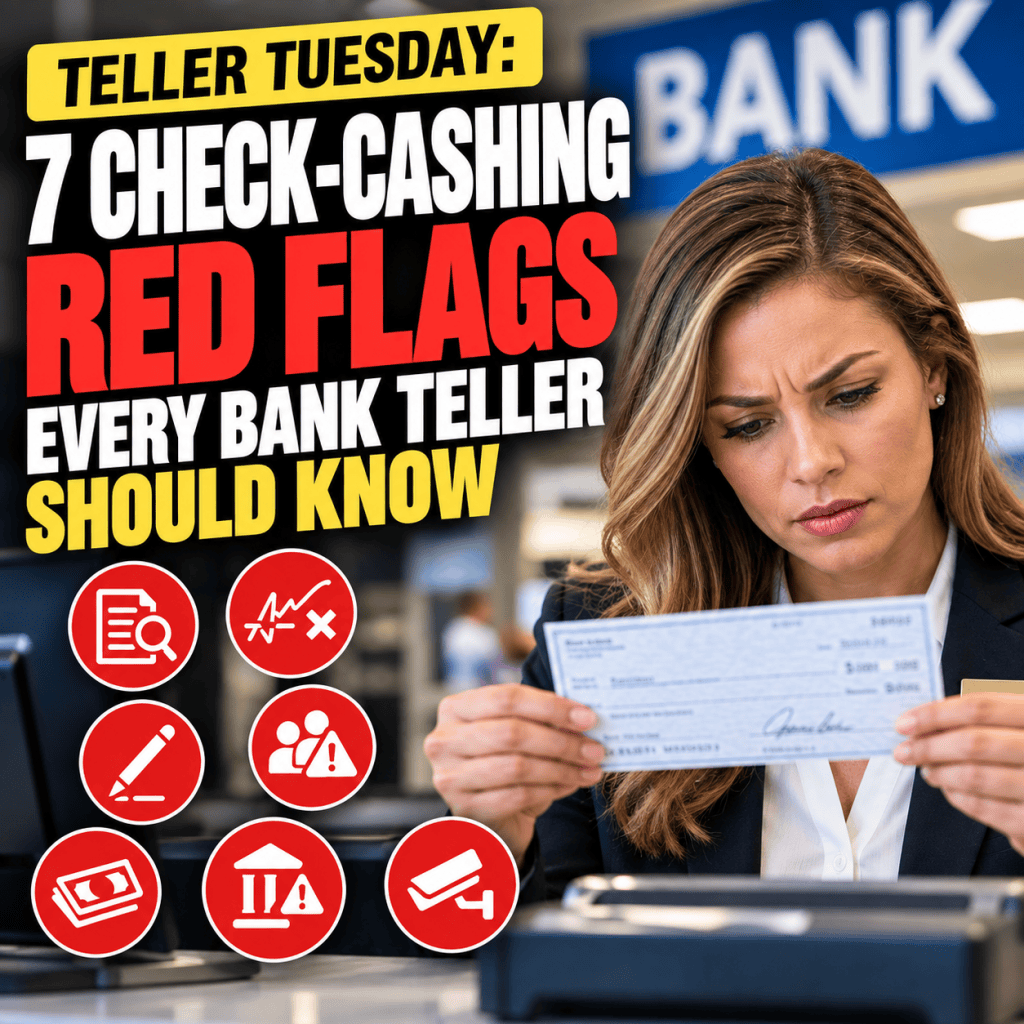
A customer walks up to your teller window with a check and asks to cash it. The check looks normal at first glance—but something feels off.
For a bank teller, that moment matters. Check fraud can involve stolen checks, counterfeit items, altered payees or amounts, forged endorsements, and fraudulent cashier’s checks. A teller does not need to become a fraud investigator at the window, but strong frontline judgment can help identify warning signs before money leaves the institution.
In this Teller Tuesday guide, we’ll walk through seven check-cashing red flags every bank teller should know—and what to do when something does not look right.
1. The Check Shows Signs of Alteration
Start with the physical check. Look for information that appears erased, overwritten, misaligned, discolored, or printed in a different font or ink. Pay particular attention to the payee name, dollar amount, date, and MICR line.
One common form of check fraud is check washing, where information on a legitimate check is chemically removed and rewritten. An altered check may still contain genuine account information, which is why the item can look convincing at first.
Teller takeaway: Do not rely on one security feature. Review the entire item and follow your financial institution’s procedures when alterations or inconsistencies appear.
2. The Customer’s Identification Does Not Match the Transaction
Identification is more than a box to check. Compare the ID with the person presenting it and with the name on the check. Follow your bank or credit union’s procedures for acceptable identification, expiration dates, signatures, and any additional verification required for check cashing.
A mismatch does not automatically mean fraud, but it is a reason to slow down and verify before proceeding.
3. The Endorsement Does Not Make Sense
Review who the check is payable to and who is actually trying to negotiate it. Be especially careful with missing endorsements, endorsements that appear inconsistent, checks payable to a business being presented for personal use, or third-party checks.
Third-party checks can create additional risk, and financial institutions may establish their own policies on whether to accept them. The key for the teller is to know the institution’s policy rather than making an exception at the window.
4. The Check and the Customer’s Story Do Not Fit Together
Sometimes the strongest red flag is not printed on the check. It comes from the circumstances surrounding the transaction.
For example, a customer may say they received a large cashier’s check from someone they met online, from a new employer, for a prize, or as payment for an item they sold. They may also say they were instructed to cash or deposit the check and immediately send part of the money somewhere else.
That pattern deserves attention. Fraudulent-check scams frequently depend on getting the victim to send good funds before the fraudulent check is discovered.
5. The Customer Is Being Rushed or Coached
Fraudsters often create urgency. A customer may appear nervous, repeatedly check their phone, receive instructions during the transaction, or insist that the money must be available immediately.
None of those behaviors proves fraud. But when unusual behavior appears alongside other transaction concerns, the combination can justify additional verification or escalation under your institution’s procedures.
6. A Cashier’s Check Is Being Treated as Automatically Safe
One of the biggest misconceptions in check fraud is that a cashier’s check cannot be fake. Counterfeit cashier’s checks can look extremely convincing.
Another important distinction: funds being available does not necessarily mean a deposited check has been determined to be legitimate. Tellers should avoid telling customers that a check has “cleared” simply because funds have become available.
Teller takeaway: Follow your institution’s verification and funds-availability procedures, especially when a large official check is connected to an unusual story or request to send money elsewhere.
7. Several Small Red Flags Appear at the Same Time
A single unusual detail may have a perfectly reasonable explanation. The bigger concern is often the combination of multiple warning signs.
Imagine a customer presents a high-dollar check, the item appears altered, the identification raises a question, the customer says they just received the check from someone online, and they need the cash immediately.
That is very different from noticing one minor inconsistency by itself.
What Should a Bank Teller Do When a Check Looks Suspicious?
The answer is not to accuse the customer of fraud. Your job is to follow procedure.
- Pause the transaction when something requires verification.
- Review the check carefully.
- Verify identification according to policy.
- Ask appropriate, neutral questions when permitted by your procedures.
- Use available verification tools and internal resources.
- Escalate to a supervisor, manager, operations team, or fraud team when required.
- Document or report concerns according to your institution’s procedures.
Most importantly, do not bypass controls simply because a customer is impatient or the lobby is busy.
The Best Tellers Know When to Slow Down
Great teller service is not just about speed. It is about completing transactions accurately, protecting the customer, and protecting the financial institution.
You will not catch every fraudulent check by looking at the paper alone. But when you combine check review, identification procedures, transaction context, customer behavior, and your institution’s controls, you become a much stronger first line of defense.
For your next shift, remember this simple rule: if the transaction does not make sense, slow down, verify, and follow procedure.
Jay Get It provides practical banking training and educational content for frontline financial professionals. Always follow your financial institution’s policies, procedures, and applicable laws and regulations.

